

Decorative Stair Risers and Entryway Tile for Alhambra’s Spanish Revival Homes
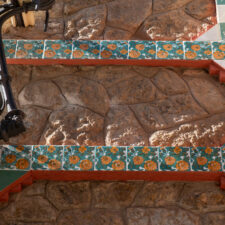
The first thing guests see when they come to your home is the front steps and the entry. In a Spanish Revival home, that first view matters even more. These houses were built around craft: thick plaster walls, arched doorways, wrought iron, and tile that adds color right where your eye lands. At Mission Tile West, we help Alhambra homeowners pick tile for stair risers, entry floors, and thresholds that suits the home’s history and holds up to daily use. Here’s how to plan the space.
Why Do Stair Risers and Entryways Suit Decorative Tile So Well?
Stair risers are the vertical faces between steps. They don’t get walked on, so they’re one of the few places in a home where you can use delicate, glossy, hand-painted tile with little worry about wear. When you look up a staircase, the risers line up into a column of pattern, so even a small amount of tile has a big effect.
Entryways work the same way. A foyer is usually small, so a bold pattern there feels special and isn’t overwhelming. Because it’s the first room people step into, it also sets the mood for the rest of the house.
Spanish Revival builders knew this. Many homes from the 1920s and 1930s in Alhambra and the surrounding San Gabriel Valley have tiled stair risers on front porches, interior staircases, and garden steps. If your home still has original tile, it’s worth protecting. If it was lost to past remodels, adding it back is a good way to return some of the home’s original character.
What Tile Patterns Work Best on Stair Risers?
You have a lot of freedom with risers, but a few approaches suit Spanish Revival homes well:
- One repeating pattern. Using the same decorative tile on every riser creates a calm, steady rhythm. This is a good choice for long staircases or homes with busy details elsewhere.
- A mix of related patterns. Different patterns that share one color palette give a collected, hand-assembled look. This is common in historic homes and suits shorter runs of steps.
- Solid tile with a decorative border. Pairing a solid color riser with a narrow patterned strip keeps the look simpler while still adding interest.
Color matters as much as pattern. Spanish Revival homes often use deep blues, warm yellows, greens, and terracotta reds, usually against cream or white backgrounds. Look at the colors already in your home, such as roof tile, wrought iron, wood beams, and plaster, and pick tile that works with them.
How Do You Measure for Stair Riser Tile?
Before choosing a tile, measure the height of each riser. Risers can vary slightly from step to step, especially in older homes, and the tile you choose needs to work with that height.
Common decorative tiles come in square sizes such as 6 by 6 inches. If your risers are a little taller than the tile, your installer may add a thin strip of trim or a solid border to fill the gap. Bring your measurements to the showroom so our team can help you find sizes and trim pieces that fit without awkward cuts through the pattern.
Also count the number of risers and add extra tile for cuts and breakage. Handmade tile varies from batch to batch, so it’s best to order everything you need at once.
What Should You Use on Stair Treads and Entry Floors?
The treads, the parts you step on, and the entry floor need tile made for foot traffic. This is where durability and safety come first.
Terracotta is a classic choice for Spanish Revival homes. Its warm, earthy color goes well with decorative risers, and it develops a soft patina over time. Terracotta is porous, so it needs to be sealed and resealed periodically to resist stains and moisture.
Glazed ceramic and porcelain floor tiles are also good options. Ask about slip resistance, especially for outdoor steps or entries that may get wet. A floor tile with a matte or textured finish is safer than a high-gloss surface.
For the front edge of each step, your installer can use a bullnose tile, a wood edge, or a stair nosing that makes the step edge easier to see and protects the tile from chipping.
How Can You Design a Spanish Revival Entryway?
An entry floor gives you room to create a focal point. A few ideas that suit the style:
- A tile rug. Lay a field of terracotta or solid tile and set a rectangle of decorative tile in the center, like an area rug.
- Decorative inserts. Place small patterned tiles at the corners where larger floor tiles meet. This adds detail without covering the whole floor.
- A patterned border. Frame the room with a band of decorative tile and keep the center simple.
- A threshold accent. A strip of patterned tile at the doorway marks the transition from outside to inside.
Think about how the entry connects to nearby rooms. If the living room has wood floors, choose a tile that changes cleanly at the doorway. If you’re also tiling the front steps, keep the colors related so the outdoor and indoor spaces feel connected.
Do Craftsman and Bungalow Homes in Alhambra Benefit Too?
Yes. Many Alhambra homes are Craftsman or Bungalow style, and decorative tile can suit them as well. For these homes, earthy matte glazes, simpler patterns, and nature-inspired designs usually feel more at home than bright Spanish colors. Porch steps with handmade tile risers in muted greens or browns can add character to a Craftsman front porch.
What About Outdoor Steps and Porches?
Southern California’s mild climate is good for outdoor tile, but outdoor steps still face sun, rain, and sprinklers. Ask whether a tile is rated for exterior use, and talk with your installer about drainage and proper setting materials. Grout and sealants also need to be suited for outdoor conditions.
Tips for Planning Your Project
- Take photos of your existing steps, entry, and nearby rooms to bring to the showroom.
- Measure riser height, tread depth, and entry floor size before you shop.
- Look at tile samples in natural light, since colors can shift between indoor and outdoor lighting.
- Work with an installer who has experience with stairs and handmade tile.
- Keep a few extra tiles after installation for future repairs.
Find Tile That Fits Your Alhambra Home
Stair risers and entryways are small spaces, but they shape how your whole home feels. The right tile can bring back historic character, welcome guests, and add a detail you’ll enjoy every time you walk through the door.
You can browse our decorative tile options for Alhambra homeowners or learn more about how we serve Alhambra.
Ready to see tile in person? Call Mission Tile West at 626-799-4595 to request a showroom appointment and start planning your stairs and entry.